
MODULE 10
Fire and Explosion Prevention and Fighting
Learn fire science, explosive atmosphere (ATEX) classification, and the procedures to prevent and fight industrial fires.
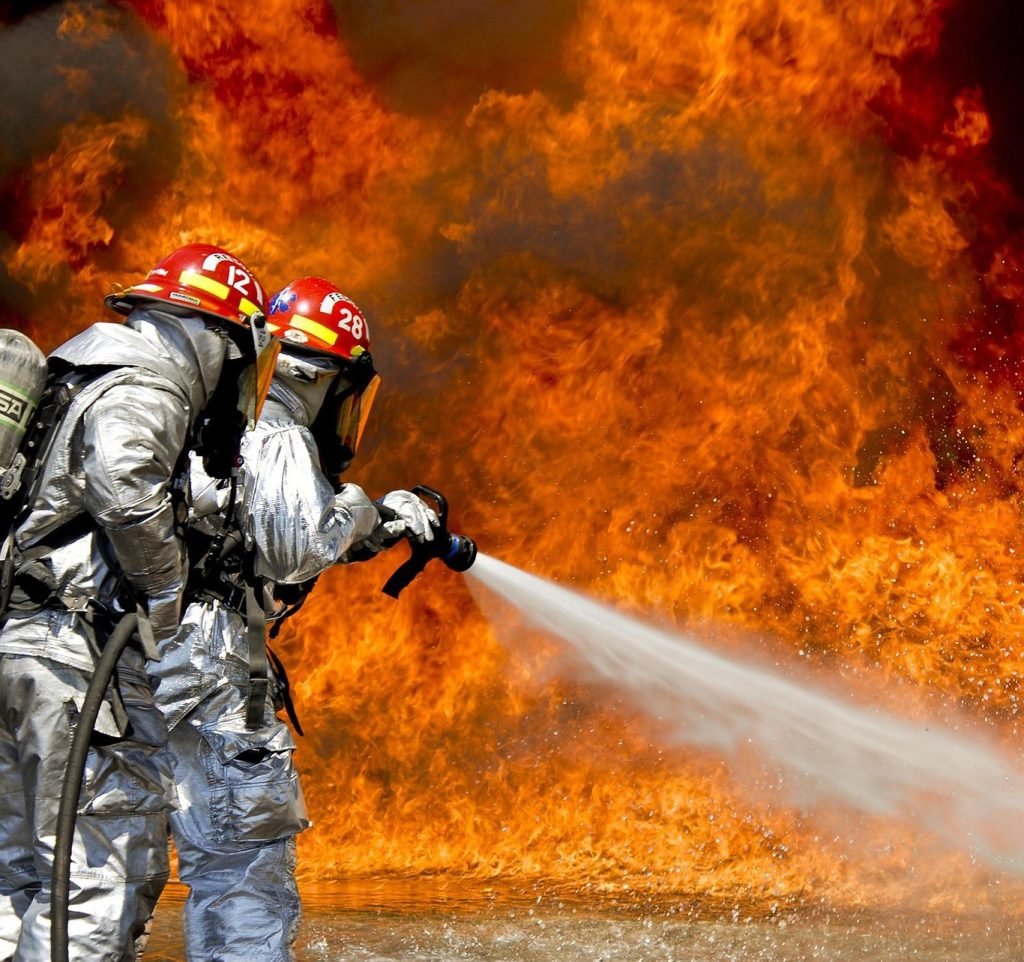
10.1 The Chemistry of Fire
For a fire to occur, three elements must be present simultaneously — the Fire Triangle. If one is missing, the fire is extinguished.
- Fuel: A substance capable of burning (solid, liquid, or gas).
- Oxidizing Agent (Oxygen): Generally the oxygen in the air.
- Activation Energy: The heat or ignition source (sparks, flames, electricity).
Technical Flammability Concepts:
- Flash point: The minimum temperature at which a liquid gives off enough vapors to ignite.
- LEL (Lower Explosive Limit): Mixture is too “lean” to burn.
- UEL (Upper Explosive Limit): Mixture is too “rich” (lacks oxygen).
10.2 Fire Classification and Extinguishing Agents
| Fire Class | Type of Fuel | Recommended Extinguishing Agent |
|---|---|---|
| Class A | Organic solids (wood, paper, cardboard, textiles) | Water spray, Foam, ABC Powder |
| Class B | Flammable liquids (gasoline, oils, paints) | Foam, ABC Powder, CO₂ |
| Class C | Flammable gases (butane, propane, natural gas) | Powder (after cutting off the supply) |
| Class D | Combustible metals (magnesium, sodium, potassium) | Specific metal powder (dry sand) |
| Class F/K | Cooking oils and fats | Specific wet chemical agents |
10.3 Extinguishing Methods
- Cooling: Acts on the heat (e.g., using water).
- Smothering (Suffocation): Acts on the oxygen, displacing it or covering the fuel (e.g., using CO₂ or fire blankets).
- Inhibition: Acts on the chemical chain reaction (e.g., using dry chemical powder).
- Starvation (Removal): Removes the fuel (e.g., closing a gas valve).
10.4 Explosion Risk Areas (ATEX)
Explosive atmospheres are marked with a yellow triangle and the letters Ex. In these zones, the use of standard electronic devices (phones, cameras, power tools) is strictly prohibited.
- Use of non-sparking tools (bronze or beryllium).
- Antistatic work clothing.
- Use of explosimeters: If the gas level reaches 10% of the LEL, the area must be evacuated immediately.
10.5 Emergency Response Protocol
- Alarm: Notify immediately through manual call points or the emergency telephone.
- Evacuation: Head to the assembly point following the marked routes. Do not use elevators.
- Extinction: Only attempt to put out the fire if it is small (incipient fire), the correct extinguisher is available, and there is a safe escape route behind you.
- First Aid: For burns, apply lukewarm water (not cold) for at least 15 minutes. Do not apply ointments or remove clothing stuck to the skin.