
MODULE 12
Emergency Response Procedures
Be prepared to respond effectively to workplace emergencies: evacuations, first aid, and communication under pressure.
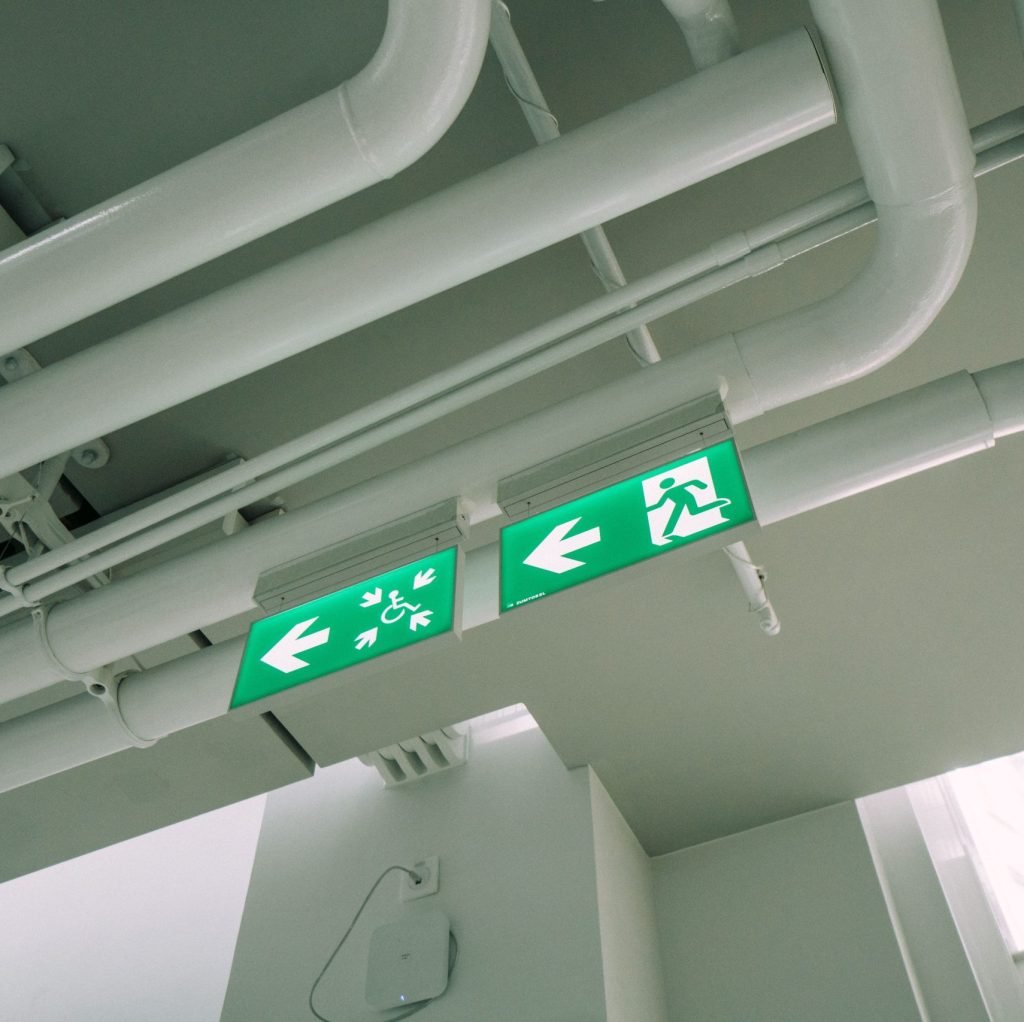
12.1 Evacuation Protocol
Upon activation of the alarm signal, all personnel must follow a strict departure protocol:
- Secure the Station: If safe to do so, shut down machinery or close gas valves before leaving. Never compromise your personal safety to save equipment.
- Immediate Departure: Do not stop to collect personal belongings. Exit calmly but without delay.
- Evacuation Routes: Follow the green emergency signage (Safety/Escape routes). The use of lifts is strictly prohibited due to the risk of entrapment from electrical failure or smoke inhalation.
- Wind Direction Awareness: In the event of gas leaks or smoke, observe the wind sock. Move perpendicular to or upwind of the source to avoid the toxic cloud or heat.
- Assembly Point: Proceed directly to the designated muster station and remain there for the roll call. This is vital to ensure no one is left behind in the building.
12.2 First Aid: The PAS Principle
If you are the first to arrive at the scene of an accident, apply the PAS (Protect, Alert, Succour) protocol:
1. Protect (P)
Secure the scene for yourself, the victim, and bystanders. If the environment is hazardous (e.g., presence of gas, live electricity, or unstable structures), do not approach without the correct training and equipment.
2. Alert (A)
Call emergency services immediately (999/112 or the internal emergency number). Provide:
- Exact location.
- The nature of the incident.
- The number of casualties and their current condition.
3. Succour / Help (S)
Only perform first aid manoeuvres (such as CPR or haemorrhage control) if you are competent and trained. Keep the victim conscious and warm (to prevent shock) until professional medical help arrives.