
MODULE 8
Hazardous Substances Management
Learn to identify, handle, store, and dispose of hazardous chemicals safely using GHS/CLP standards.
8.1 Classification and Labeling (GHS)
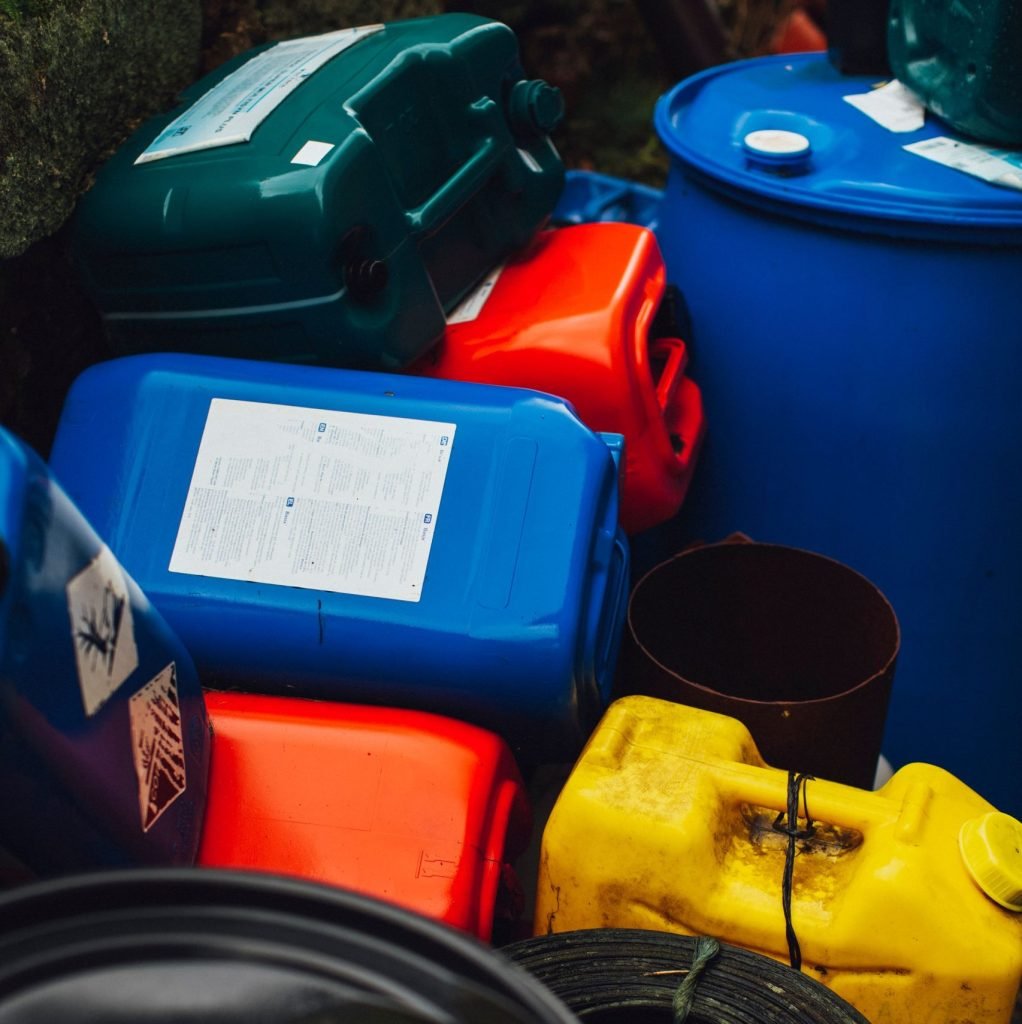
Hazard identification is performed through the Globally Harmonized System (GHS). Labels must be legible and provide immediate information regarding the nature of the risk.
| Category | Examples | Nature of Hazard |
|---|---|---|
| Environmental Hazard | Pesticides, used oils | Contamination of soil and aquifers |
| Corrosive | Acids (hydrochloric), bases (soda) | Destruction of living tissue and metals |
| Harmful / Irritant | Diluted solvents, varnishes | Allergic reactions and inflammation |
| Toxic | Methanol, carbon monoxide | Severe systemic damage or lethal effects |
| Flammable | Gasoline, ethyl alcohol | High ignition capacity |
| Oxidizing | Pure oxygen, peroxides | Violently accelerate fires |
| Explosive | Dynamite, certain pressurized gases | Sudden release of energy |
8.2 Exposure Control Hierarchy
- Substitution at Source: Replace the substance with a less hazardous one or modify the process to eliminate chemical use.
- Technical and Collective Measures: Installation of local exhaust ventilation systems, general ventilation, or process isolation.
- PPE (Last Resort): Use of respirators with specific filters, chemical gloves, and protective suits only when previous measures are insufficient.
8.3 Limit Values and Sensory Perception
- Exposure Limit Value (ELV): The maximum concentration of a substance in the air to which a worker can be exposed without suffering harm.
- Odor Threshold: The ability to detect a substance by smell.
Critical Warning: Many lethal gases, such as Carbon Monoxide (CO), are odorless, colorless, and tasteless. Never rely on smell — the use of calibrated gas detectors is mandatory.
8.4 The Risk of Asbestos
Asbestos is a fibrous material that is highly carcinogenic when its particles become airborne.
- White Asbestos (Chrysotile): Moderate/high risk.
- Brown Asbestos (Amosite): High risk.
- Blue Asbestos (Crocidolite): Extreme risk.
Any handling of materials suspected of containing asbestos must be performed by specialized companies under strict decontamination protocols.
8.5 Oxygen Concentrations in the Air
- 21%: Normal concentration in the air.
- Below 19%: Oxygen deficiency. Risk of asphyxiation, loss of consciousness, and death.
- Above 23%: Oxygen enrichment. Extreme risk of fire and spontaneous explosion of materials.
8.6 Industrial Gas Cylinders
- Storage: Must always be in an upright position, secured with chains, and protected from direct sunlight.
- Segregation: Mandatory to separate flammable gas cylinders from oxidizing gases (such as oxygen) to prevent reactions in case of a leak.
- Color Coding: The shoulder (top part) of the bottle indicates the type of gas it contains according to current regulations.
8.7 Biological Risks
These refer to exposure to microorganisms such as bacteria, viruses, and fungi.
- Routes of Entry: Respiratory, digestive (ingestion), dermal (skin), or parenteral (wounds/needlesticks).
- Preventive Measures: Vaccination programs, rigorous personal hygiene, and use of specific PPE.