- +32 493 43 62 95
- +34 640 866 499
- info@internationaltqi.com

Module 9: Electrical Safety
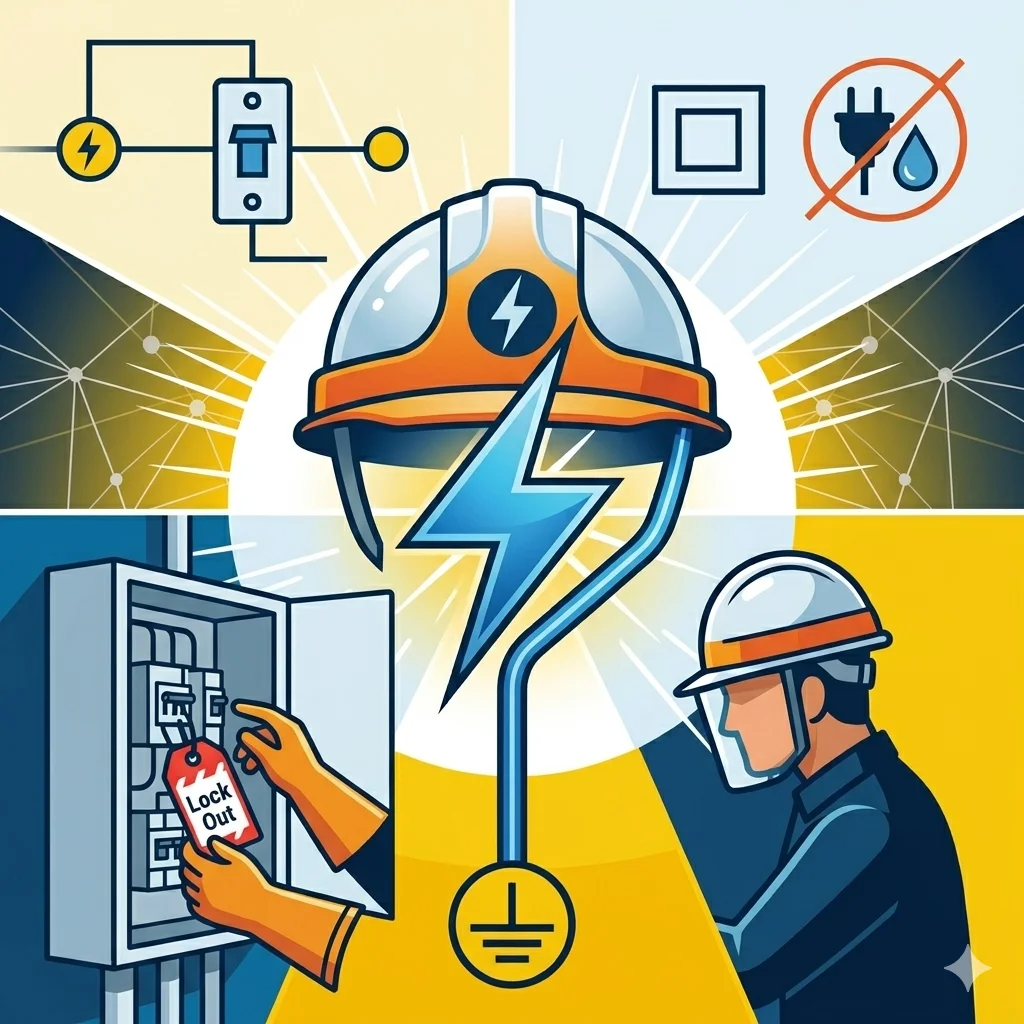
Electricity is a two-dimensional hazard: it can cause direct damage to the body (electric shock) and indirect damage to the environment (fire and explosions). As an invisible and odorless energy source, its detection relies exclusively on measuring equipment and strict regulatory compliance.
9.1 Hazards and Effects of Electric Current
The damage caused by an electric shock depends on the Intensity (Amperage), the Duration of exposure, and the Path through the body.
- Electrocution: Interruption of the heart or respiratory rhythm that results in death.
- Burns: Both external (at entry and exit points) and internal (destruction of organs and tissues).
- Secondary Effects: Violent muscle contractions (tetanization) that can cause falls from heights or the ejection of objects.
Severity Factors
Factor | Influence on Risk |
Body Resistance | Dry skin offers higher resistance; wet or sweaty skin reduces resistance drastically. |
Current Path | Paths passing through the heart or head (e.g., hand-to-hand) are the most critical. |
Voltage (V) | Higher voltage increases the current’s ability to overcome body resistance. |
9.2 Types of Current and Specific Risks
Alternating Current (AC) vs. Direct Current (DC)
- Alternating Current: Standard grid power. Highly dangerous as it can cause ventricular fibrillation even at relatively low voltages.
- Direct Current: Used in batteries and solar panels. It can cause deep internal chemical burns and cardiac arrest.
Static Electricity
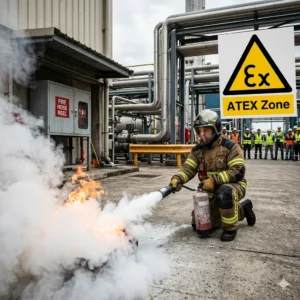
Built up by friction on non-conductive materials. The primary industrial risk is the generation of a spark in flammable (ATEX) atmospheres.
Prevention: Use of dissipative footwear, humidity control, and equipotential bonding (connecting all metal parts to each other and to the ground).
9.3 Technical Protection Measures
Electrical safety is based on preventing contact and diverting energy in case of a fault.
- Double Insulation: Tools marked with the symbol $\square$ (two concentric squares). They do not require a ground connection because their design prevents outer metal parts from becoming energized.
- Grounding (Earthing): Channels leakage currents into the ground, preventing the worker’s body from becoming the conductor.
- Residual Current Device (RCD / Differential Switch): A device that cuts the power in milliseconds when it detects a current leak.
Safety Voltage: Use of Safety Extra-Low Voltage (SELV) (e.g., $12V$, $24V$, or $50V$) in high-risk environments like wet areas or metallic confined spaces.
9.4 Safety with Cables and Extensions
- Extension Leads: Must be fully unrolled to prevent overheating due to induction (the “coil effect”).
- Ingress Protection (IP) Rating:
- IP20: For dry interiors only (protected against finger touch).
- IP44: Protected against splashing water (suitable for common outdoor use).
- IP67: Protected against temporary immersion.
- Visual Inspection: Never use cables with electrical tape repairs or plugs showing burn marks.
9.5 Emergency Protocol for Electrical Accidents
Never touch a victim who is still in contact with the current!
- Isolate the source: Turn off the main switch or unplug the equipment.
- No direct contact: If power cannot be cut, separate the victim using a non-conductive object (dry wood, plastic).
- First Aid: Once the area is safe, check breathing and pulse. Start CPR if necessary and call emergency services.

INTERNATIONAL TQI
VCA Training and Courses
DISCOVER MORE
VCA Training Center
Online Courses
To obtain the official certificate, it is necessary to take the exams and attend the courses in person.
Contact
Direction:
Van Maerlantstraat, 2060. Amberes
Days:
Monday, Wednesday, and Friday
Schedule:
16:00 – 18.30
Phone:
+32 493 43 62 95
+34 640 866 499
Mail: info@internationaltqi.com
©2025. internationaltqi.com | tqivca.com . All Rights Reserved.