- +32 493 43 62 95
- +34 640 866 499
- info@internationaltqi.com
B-VCA COURSE
Module 1. Legal Framework and Responsibilities
The foundation of any safe working environment is compliance with the Arbowet (Working Conditions Act). This legislation is not merely a set of rules, but a dynamic risk management system.
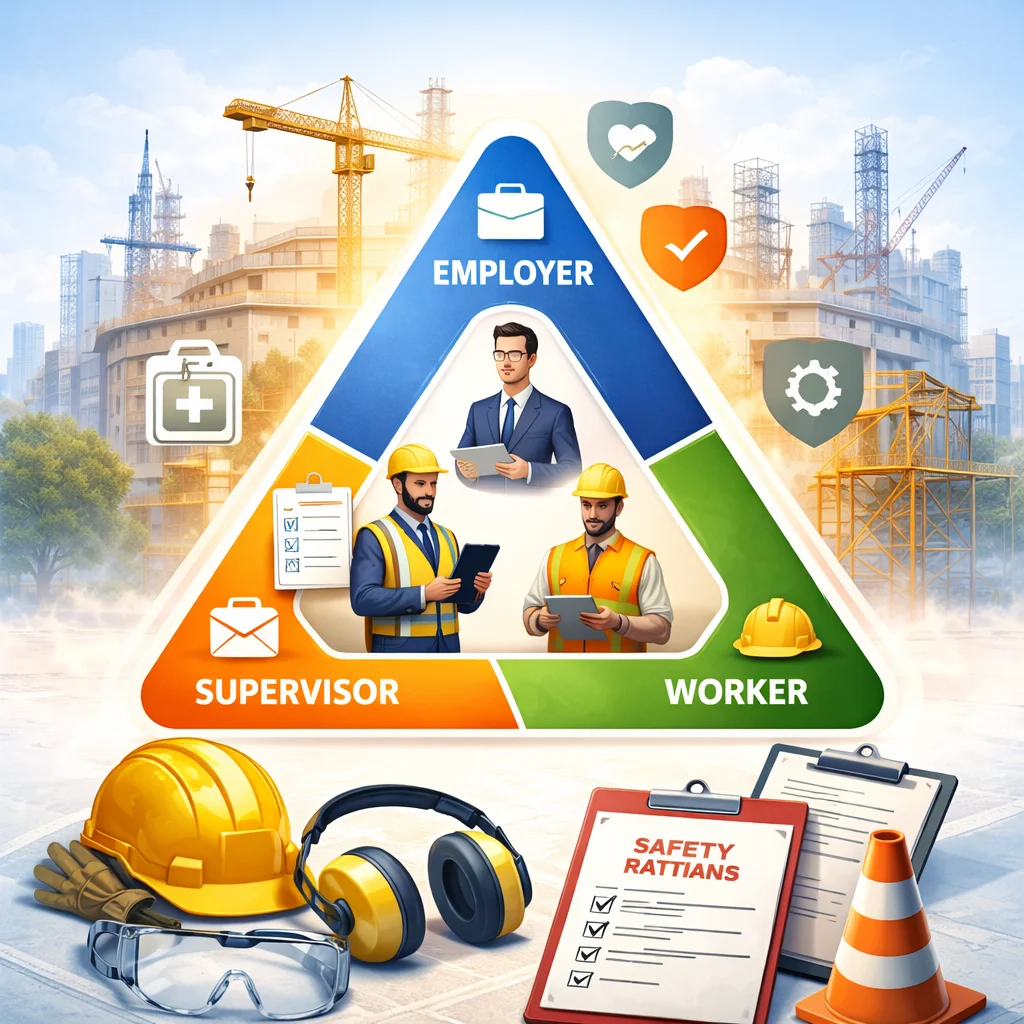
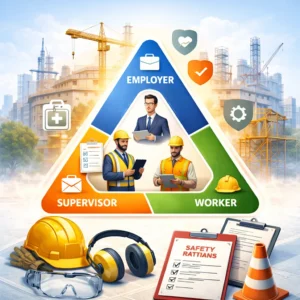
1. The Responsibility Triangle
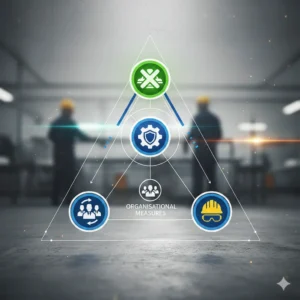
In the VCA system, safety is divided into three fundamental pillars that must work in harmony:
| Actor | Primary Responsibility | Key Action |
| Employer | To guarantee a safe and healthy environment. | To provide PPE, training, and certified equipment. |
| Supervisor | To monitor compliance with regulations. | To ensure that work permits are respected. |
| Worker | Safe execution and self-care. | To use PPE correctly and report incidents. |
2. Principles of the Arbowet (Working Conditions Act)
Modern legislation is based on the hierarchy of risk control. This means that providing a helmet is not enough; one must attempt to eliminate the hazard at its source.
Avoiding risks: If a task can be performed more safely (e.g., from the ground instead of at height), it must be done that way.
Combating risks at the source: Replacing noisy machinery with quieter versions before resorting to earplugs.
Priority of collective measures: A guardrail (which protects everyone) is better than an individual harness (which only protects one person).
3. Health Surveillance and Technical Assistance
The worker is entitled to professional medical follow-up. To achieve this, the company must have the support of specialised services.
Occupational Health Services (Arbodienst):
Medical Examination (PAGO/PMO): A periodic assessment to confirm that the worker is fit for their specific tasks.
Risk Identification and Evaluation (RI&E): A mandatory legal document that analyses all company hazards and creates an action plan.
Accident Investigation: Technical analysis to prevent a negative event from recurring.
4. Mandatory Rights and Duties
It is crucial to understand that compliance with these regulations is not optional; it is a contractual and legal obligation.
The worker has a DUTY to:
Correctly use machinery and dangerous substances.
Not tamper with or remove safety devices from equipment.
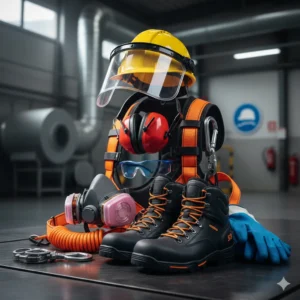
Strict use of PPE: Helmets, safety footwear, hearing protection, etc., as signposted.
Participate in safety training and Toolbox meetings.
The worker has the RIGHT to:
Work stoppage: If you consider there is a serious and imminent risk to your health, you may stop work and report it immediately.
Receive clear information regarding the specific risks of your workstation.
5. Critical Risk Management: Work Permits
For high-risk tasks, regulations require a Work Permit. This document is a legal checklist ensuring that conditions are optimal before commencement.
Professional Note: A work permit is not an “authorisation to take risks”; it is a signed agreement confirming that all preventative measures are active.
Common examples requiring a permit:
Work with open flames or sparks (Hot work).
Entry into tanks, silos, or sewers (Confined spaces).
Excavation work (risk of damaging cables or pipes).
Use of heavy-duty cranes.
INTERNATIONAL TQI
VCA Training and Courses
DISCOVER MORE
VCA Training Center
Online Courses
To obtain the official certificate, it is necessary to take the exams and attend the courses in person.
Contact
Direction:
Van Maerlantstraat, 2060. Amberes
Days:
Monday, Wednesday, and Friday
Schedule:
16:00 – 18.30
Phone:
+32 493 43 62 95
+34 640 866 499
Mail: info@internationaltqi.com
©2025. internationaltqi.com | tqivca.com . All Rights Reserved.