- +32 493 43 62 95
- +34 640 866 499
- info@internationaltqi.com
Module 4: The Work Environment and Ergonomics
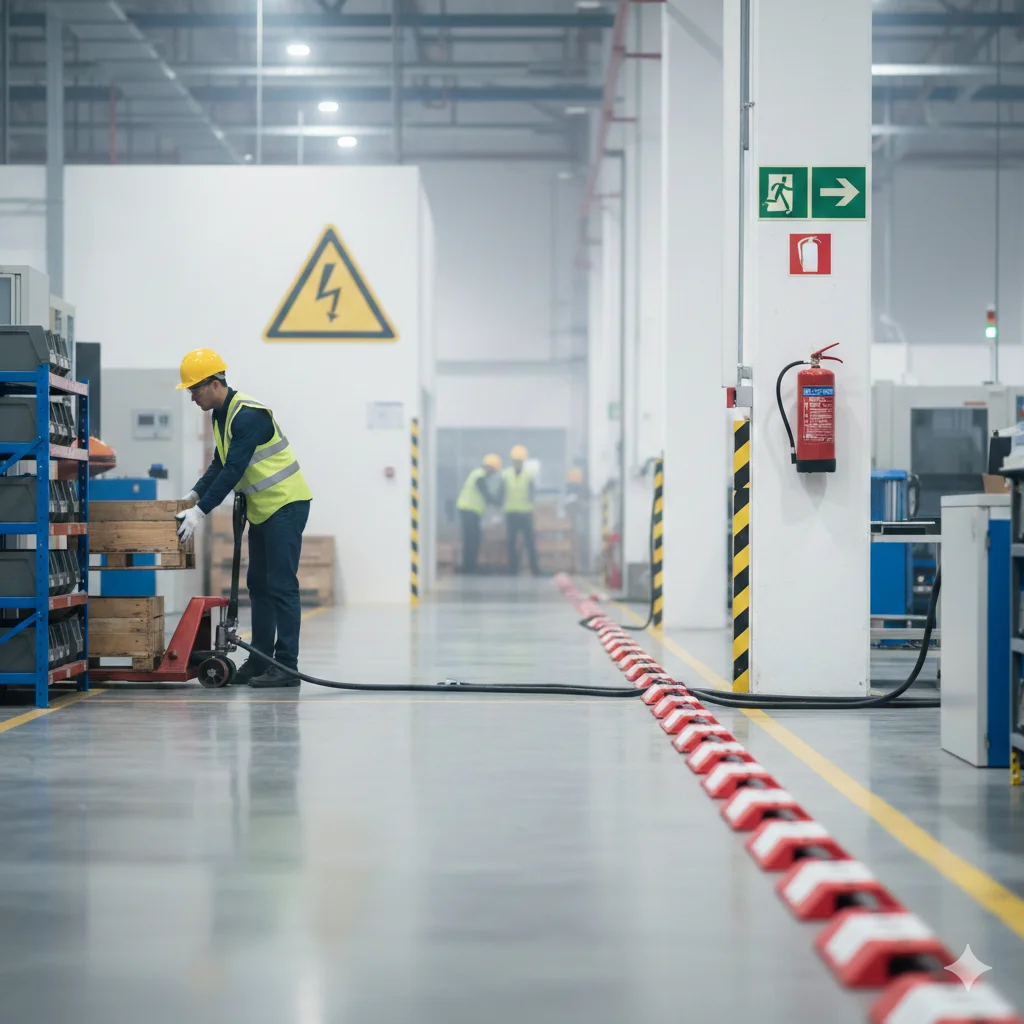
A functional workplace is more than just a site where machinery operates; it is an environment designed to protect the physical and mental health of every worker. This module examines environmental risks, physical hazards, and the principles of workplace safety.
4.1 Noise Pollution: The Invisible Risk
Noise is a deceptive hazard. Beyond direct hearing damage, it causes fatigue, stress, and loss of concentration—all of which are primary catalysts for workplace accidents.
Safety Thresholds (Standard Regulations):
| Noise Level | Action Required |
| 80 dB(A) | The employer must provide hearing protection. Usage is recommended. |
| 85 dB(A) | Hearing protection is mandatory. Noise zones must be clearly signposted. |
| Exposure Limit | Daily dose limits must not be exceeded without immediate mitigation measures. |
The Golden Rule: If you must shout to be heard by a colleague standing one metre away, the noise level likely exceeds 85 dB(A) and requires immediate protection.
4.2 Housekeeping and Fall Prevention
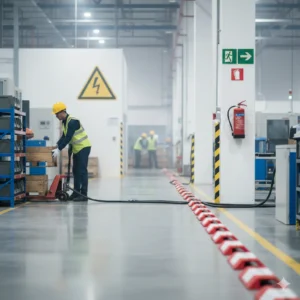
Slips, trips, and falls (STFs) remain the leading cause of workplace injuries. Prevention in this area is largely driven by behaviour and discipline.
Obstacle Management: Cables must be routed through cable protectors or elevated above walkways. Tools must be returned to their designated storage immediately after use.
Surface Control: Any detected spill must be cordoned off, signposted, and cleaned immediately.
Professional Lighting: Adequate illumination is mandatory to ensure uneven surfaces, obstacles, or spills are visible to all personnel.
4.3 Ergonomics: Manual Handling of Loads
Back injuries, particularly lower back pain, often become chronic conditions. Mastering safe lifting techniques is a critical skill for the B-VCA certification.
The Lifting Sequence:
| Phase | Correct Technical Procedure |
| The Approach | Keep feet apart for a stable base, positioned close to the load. |
| The Grip | Keep the back straight; bend the knees to use the power of the legs. |
| The Movement | Keep the load close to the body. Never twist the torso; move your feet to turn. |
| The Limit | Maximum recommended weight for individual lifting is 23 kg (NIOSH/VCA guidelines). |
4.4 Technical Safety: The LOTO System
For maintenance and repairs, simply “turning off a switch” is insufficient. Industrial safety relies on the LOTO (Lock Out / Tag Out) system to prevent accidental energisation.
Lock Out: Placing a physical padlock on an energy isolator (breaker or valve) to ensure it cannot be turned on.
Tag Out: Attaching a highly visible tag indicating the authorised person performing the work and the reason for the isolation.
Blind Flanges (Blinding): In piping systems, a solid metal disc is inserted to physically block the flow of gases or liquids, ensuring safety even if a valve fails.
4.5 Safety Signage
The code of colours and shapes is universal. Memorising these categories is vital for the official exam:
Prohibition (Red, Circular with diagonal bar): Indicates actions that are strictly forbidden.
Example: No smoking or No entry.
Warning / Danger (Yellow, Triangular): Alerts personnel to potential hazards in the vicinity.
Example: Electrical risk or Toxic substances.
Mandatory Action (Blue, Circular): Specifies a requirement that must be followed.
Example: Use of safety helmet or Eye protection required.
Safe Condition (Green, Square or Rectangular): Identifies safety equipment and evacuation routes.
Example: Emergency exit or First aid kit.
Fire Safety (Red, Square or Rectangular): Locates equipment used for fire-fighting.
Example: Fire extinguisher or Fire hose.

INTERNATIONAL TQI
VCA Training and Courses
DISCOVER MORE
VCA Training Center
Online Courses
To obtain the official certificate, it is necessary to take the exams and attend the courses in person.
Contact
Direction:
Van Maerlantstraat, 2060. Amberes
Days:
Monday, Wednesday, and Friday
Schedule:
16:00 – 18.30
Phone:
+32 493 43 62 95
+34 640 866 499
Mail: info@internationaltqi.com
©2025. internationaltqi.com | tqivca.com . All Rights Reserved.