B-VCA COURSE

Module 12: Emergency Response Procedures

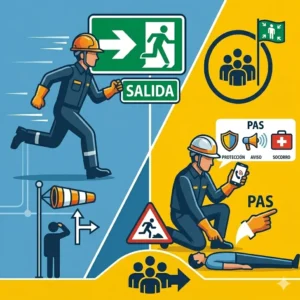
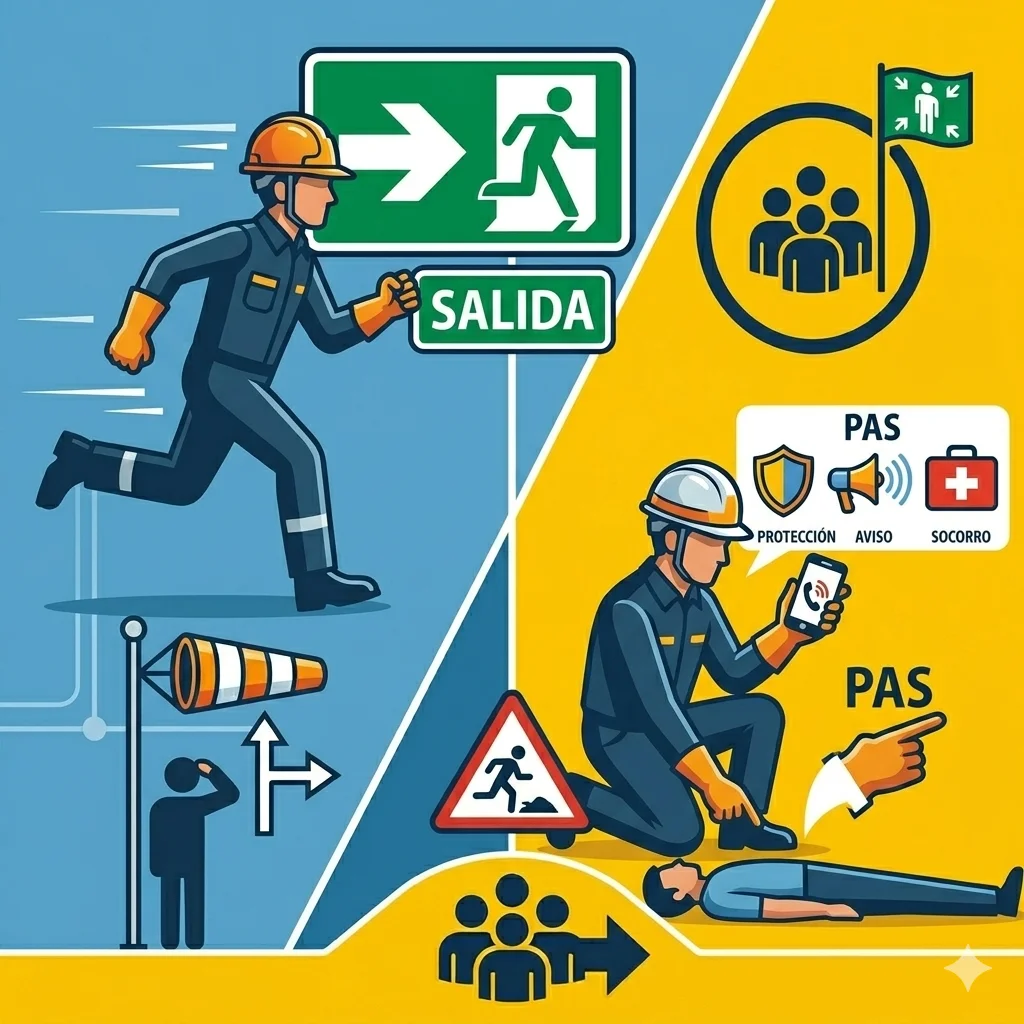
A square professional safety illustration without text. It is divided diagonally into technical blue and safety yellow sections. The design features a worker in an orange safety helmet running toward an 'EXIT' sign with green directional arrows, next to a wind sock icon. Below, a worker provides first aid to a casualty on the ground, referencing the PAS principle. The background shows an assembly point symbol and muster station flag. The style is clean vector illustration with precise lines, technical blues, safety oranges, and yellows.

Effective emergency response is based on rapid, disciplined action. In a crisis, following established protocols saves lives and prevents the escalation of industrial incidents.

12.1 Evacuation Protocol

Upon activation of the alarm signal (whether acoustic or via PA system), all personnel must follow a strict departure protocol.

  • Secure the Station: If safe to do so, shut down machinery or close gas valves before leaving. Never compromise your personal safety to save equipment.
  • Immediate Departure: Do not stop to collect personal belongings. Exit calmly but without delay.
  • Evacuation Routes: Follow the green emergency signage (Safety/Escape routes). The use of lifts is strictly prohibited due to the risk of entrapment from electrical failure or smoke inhalation.
  • Wind Direction Awareness: In the event of gas leaks or smoke, observe the wind sock. Move perpendicular to or upwind of the source to avoid the toxic cloud or heat.
  • Assembly Point: Proceed directly to the designated muster station and remain there for the roll call. This is vital to ensure no one is left behind in the building.

12.2 First Aid: The PAS Principle

If you are the first to arrive at the scene of an accident, you must apply the PAS (Protect, Alert, Succour) protocol to manage the situation effectively:


1. Protect (P)

Secure the scene for yourself, the victim, and bystanders. If the environment is hazardous (e.g., presence of gas, live electricity, or unstable structures), do not approach without the correct training and equipment.


2. Alert (A)

Call emergency services immediately (999/112 or the internal emergency number). Provide:

  • Exact location.
  • The nature of the incident.
  • The number of casualties and their current condition.

3. Succour / Help (S)

Only perform first aid manoeuvres (such as CPR or haemorrhage control) if you are competent and trained. Keep the victim conscious and warm (to prevent shock) until professional medical help arrives.

VCA Training Center

Online Courses

To obtain the official certificate, it is necessary to take the exams and attend the courses in person.

Contact

Direction:

Van Maerlantstraat, 2060. Amberes

Days:

Monday, Wednesday, and Friday

Schedule:

16:00 – 18.30

Phone:

+32 493 43 62 95

+34 640 866 499

Mail: info@internationaltqi.com

©2025. internationaltqi.com | tqivca.com . All Rights Reserved.